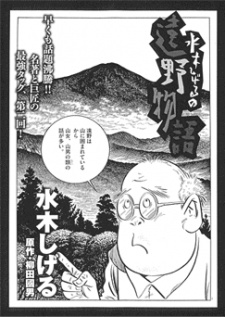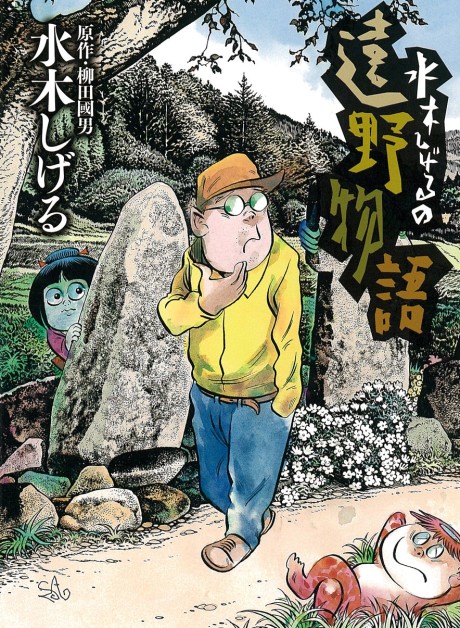
Mizuki Shigeru no Tono Monogatari
水木しげるの遠野物語 MangaInformações adicionais
Format
MANGA
Status
Finished
Start date
Jul 25, 2008
End date
Nov 25, 2009
Average score
56/100
Popularity
358
Favorites
2
Genres
Horror
Mystery
Supernatural
Mystery
Supernatural
Tags
Historical
79%
Partly or completely set during a real period of world history.
Youkai
79%
Prominently features supernatural creatures from Japanese folklore.
War
60%
Partly or completely set during wartime.
Rural
60%
Partly or completely set in the countryside.
Nudity
60%
Features a character wearing no clothing or exposing intimate body parts.
Mizuki Shigeru no Tono Monogatari
水木しげるの遠野物語 MangaSinopse
Shigeru Mizuki--Japan's grand master of yokai comics--adapts one of the most important works of supernatural literature into comic book form. The cultural equivalent of the fairy tales of the Brothers Grimm, Tono Monogatari is a defining text of Japanese folklore and one of the country's most important works of literature. This graphic novel was created during the later stage of Mizuki's career, after he had retired from the daily grind of commercial comics to create personal, lasting works of art.
Originally written in 1910 by folklorists and field researchers Kunio Yanagita and Kizen Sasaki, Tono Monogatari celebrates and archives legends from the Tono region. These stories were recorded as Japan's rapid modernization led to the disappearance of traditional culture. This adaptation mingles the original text with autobiography: Mizuki attempts to retrace Yanagita and Sasaki's path, but finds his old body is not quite up to the challenge of following in their footsteps. As Mizuki wanders through Tono he retells some of the most famous legends, manifesting a host of monsters, dragons, and foxes. In the finale, Mizuki meets Yanagita himself and they sit down to discuss their works.
(Source: Drawn & Quarterly)
Originally written in 1910 by folklorists and field researchers Kunio Yanagita and Kizen Sasaki, Tono Monogatari celebrates and archives legends from the Tono region. These stories were recorded as Japan's rapid modernization led to the disappearance of traditional culture. This adaptation mingles the original text with autobiography: Mizuki attempts to retrace Yanagita and Sasaki's path, but finds his old body is not quite up to the challenge of following in their footsteps. As Mizuki wanders through Tono he retells some of the most famous legends, manifesting a host of monsters, dragons, and foxes. In the finale, Mizuki meets Yanagita himself and they sit down to discuss their works.
(Source: Drawn & Quarterly)